




















Plan a district-wide rollout
See how districts bring Rapunzl to every classroom and meet their financial literacy mandate.
Book A District Call
Pennsylvania Personal Finance Standards 2026: A Teacher's Guide
If you teach in Pennsylvania, 2026 is a milestone year. The state's personal finance academic standards take effect July 1, 2026, and students entering 9th grade in the 2026–27 school year will need to complete a stand-alone personal finance course to graduate. That first cohort is the Class of 2030.
For teachers, this is a mandate and an opportunity at the same time. It's a chance to build or refresh a course that prepares students for real financial decisions, not just another box to check.
This guide breaks down what the new standards cover, the timeline you're working with, and practical ways to align your course without turning the whole thing into a compliance chore. One note before we start: always confirm the details against Pennsylvania's official standards before you finalize curriculum decisions. We link the primary source at the bottom.
What changed in Pennsylvania
Pennsylvania joined the growing list of states requiring personal finance for graduation. The requirement comes from Act 35 of 2023, which amended Section 1551 of the Public School Code of 1949, according to the Pennsylvania General Assembly's own act-history page: every school entity must offer a stand-alone personal finance course, and students entering grade 9 in 2026-27 must complete it to graduate. The accompanying personal finance academic standards take effect July 1, 2026 (22 Pa. Code Ch. 4), per the Pennsylvania Code & Bulletin's own text. That's why now, not next spring, is the moment to get your course aligned.

Who's qualified to teach Pennsylvania's personal finance course?
Seven Pennsylvania teacher certification areas qualify to teach the new personal finance course: Agriculture (CSPG 30), Business/Computer/Information Technology (CSPG 33), Citizenship Education (CSPG 35), Family and Consumer Sciences (CSPG 44), Marketing/Distributive Education (CSPG 49), Mathematics (CSPG 50), and Social Studies (CSPG 59) — confirm the current list against PDE's own Certification and Staffing Policy Guidelines before assigning a teacher.
That range is wider than most administrators expect, and it's the biggest staffing question districts are asking right now. A business teacher, a math teacher, and a family-and-consumer-sciences teacher can all end up assigned to the same course, with very different comfort levels around investing.
Seven Pennsylvania certification areas qualify to teach the new course, from business and social studies to math and family and consumer sciences. That's exactly why curriculum that needs no finance background, like Rapunzl's, matters for staffing it.
What is Act 35, and what does it actually require?
Act 35 of 2023 is the law behind Pennsylvania's personal finance requirement. It amended Section 1551 of the Public School Code of 1949 to require every school entity to offer a stand-alone personal finance course of at least one-half (0.5) credit, for students entering grade 9 in 2026-27, with the Class of 2030 first held to it.
Act 35 isn't the same document as the standards themselves. The Pennsylvania academic standards for personal finance, under 22 Pa. Code Ch. 4, define what the half-credit course has to teach, and those take effect separately, on July 1, 2026.
Pennsylvania's personal finance course requirement comes from Act 35 of 2023, which amended the Public School Code to require a stand-alone, at-least-half-credit course starting with the 2026-27 school year. It's the framework Rapunzl's curriculum is built to satisfy in a single course.
The six standards domains
Pennsylvania's high school personal finance standards, effective July 1, 2026, are organized around six domains:
- Earning income and careers. How income is earned, career and education choices, taxes and take-home pay.
- Money management and budgeting. Building and living within a budget, tracking spending, setting financial goals.
- Saving and investing. Saving strategies, the power of compound growth, and how investing works over time.
- Credit and debt. How credit works, borrowing responsibly, interest, and managing debt.
- Risk management and insurance. Protecting against financial loss, types of insurance, and evaluating risk.
- Financial decision-making and consumer protection. Making informed decisions, recognizing fraud, and consumer rights.
The full, verbatim standard statements live on the state's official page, linked below. This structure maps cleanly onto the Council for Economic Education's six pillars (Earning Income, Saving, Spending, Investing, Managing Credit, and Managing Risk). So if you're already teaching to CEE, you're most of the way there.
Pennsylvania personal finance standards to Rapunzl module crosswalk
Every strand in Pennsylvania's personal finance standards maps to one of the Council for Economic Education's six pillars, and Rapunzl's curriculum is built on those same six pillars, so a single Rapunzl course covers all of them. The table below uses the same strand names and module mapping already published on Rapunzl's Pennsylvania standards crosswalk page.
| Pennsylvania strand | CEE pillar | Rapunzl modules |
|---|---|---|
| Earning income & careers | Earning Income | Taxes & Income, Careers In Finance |
| Money management & budgeting | Spending | The Basics Of Banking, Buying Your First Home, Paying For College |
| Saving & investing | Investing | Welcome To The Stock Market, What Makes A Good Stock?, ETFs & Mutual Funds |
| Credit & debt | Managing Credit | The Power & Risks Of Credit, How To Make Loans Work For You |
| Risk management & insurance | Managing Risk | Diversification & Risk, Insurance & Retirement |
| Financial decision-making & consumer protection | Financial Decision-Making | Financial Statistics, Top Investor Strategies |
Educators can request a full Pennsylvania standards crosswalk through the Educator Dashboard.
Your timeline
Here's how to think about the runway:
- Now through spring 2026. Review the new standards, audit your current materials against the six domains, and find the gaps. They usually show up in saving/investing and risk management, the two areas hardest to teach from a textbook alone.
- Summer 2026. Finalize your course and materials so you're ready before the standards go live on July 1.
- 2026–27 school year onward. The requirement applies to incoming 9th graders. Build the course somewhere across grades 9–12.
The domains teachers tell us they feel least equipped for are saving/investing and risk. Those happen to be exactly the areas where hands-on practice beats reading.
What Pennsylvania districts must do before the 2026-27 deadline
Pennsylvania districts have five concrete things to confirm before the 2026-27 school year, and most of them are decisions rather than paperwork.
| Action | Deadline / timing | Source |
|---|---|---|
| Offer a stand-alone, at-least-0.5-credit personal finance course | Starting 2026-27 school year | Act 35 of 2023 |
| Align instruction to the new Chapter 4 standards | Effective July 1, 2026 | 22 Pa. Code Ch. 4 |
| Decide which subject area the credit satisfies (math, social studies, business, or FCS) | Before scheduling the 2026-27 course | Act 91 of 2019 |
| Confirm the assigned teacher holds a qualifying certification (CSPG 30, 33, 35, 44, 49, 50, or 59) | Before assigning the course | PDE Certification and Staffing Policy Guidelines |
| Document standards coverage with a crosswalk | Ongoing, first review typically after year one | Rapunzl's Educator Dashboard provides one |
Pennsylvania districts have five concrete things to confirm before the 2026-27 school year: a stand-alone half-credit course, alignment to the July 2026 standards, a decision on which subject area the credit satisfies, a certified teacher, and a documented standards crosswalk. Rapunzl's Educator Dashboard covers the last one directly.
Aligning your course (and where Rapunzl fits)
Our curriculum and simulator align to all six CEE pillars plus financial decision-making, which maps to every Pennsylvania domain above. Here's how that plays out in a PA classroom:
- Saving and investing becomes concrete when students manage a simulated $10,000 portfolio of stocks and crypto on live Nasdaq data. They experience compound growth, volatility, and diversification instead of just reading the definitions.
- Risk management shows up on its own when a student's holding drops and they have to decide what to do next. That's a real lesson in evaluating risk, with nothing but pride on the line.
- Standards alignment is easy to prove. With more than 40 modules of curriculum, Rapunzl provides a Pennsylvania-specific standards crosswalk through its Educator Dashboard, and grade exports integrate with most LMS providers such as Clever, ClassLink, and Google Classroom, so administrators can see the mapping and the gradebook in one place.
- No finance background required. The curriculum is built so any teacher can deliver it, with lessons scaffolded from a three-week unit up to a full 28-week, year-long course, in English and Spanish.
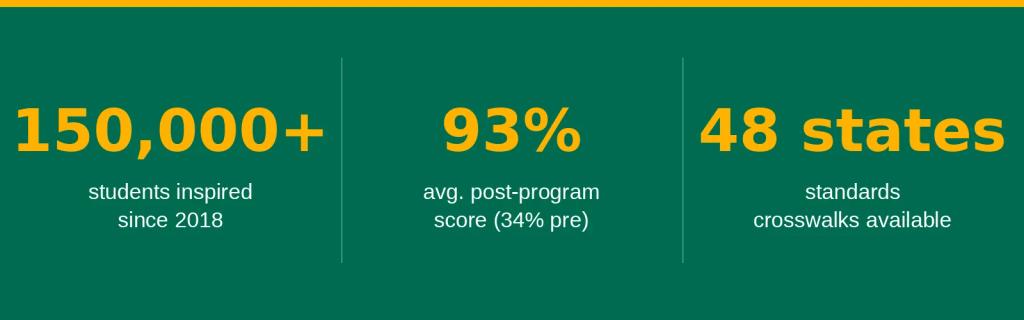
If your administrator wants evidence before signing off, Rapunzl's track record is documented. Students typically move from 34% on financial literacy assessments, under the 64% national average, to 93%, roughly 26–29 points above the national average. That's the kind of number that turns a compliance conversation into an easy yes.
How to get ahead of Pennsylvania's 2026–27 deadline
The teachers who'll have the smoothest 2026–27 are the ones building their course this year, not the week before it's required. Start by mapping your existing materials to the six domains. Then fill the investing and risk gaps with hands-on tools that make those concepts stick.
A note for administrators and department heads
If you're planning at the district level, three decisions matter most: scheduling the course somewhere across grades 9-12, staffing it with a certified teacher, and documenting standards coverage. The checklist above covers all three, plus the credit-placement decision under Act 91.
Sources
- PA General Assembly — Act No. 35 of 2023 (2023)
- Pennsylvania Code & Bulletin — Title 22 Ch. 4, Academic Standards for Personal Finance (2026)
- PA General Assembly — Act No. 91 of 2019 (2019)
- PA.gov — Economic Education / Personal Finance curriculum page (2026)
Frequently Asked
Questions
The academic standards take effect July 1, 2026. Students entering 9th grade in 2026–27 must complete a stand-alone personal finance course to graduate, with the Class of 2030 the first affected cohort. Confirm current details with the Pennsylvania Department of Education.
Yes. The requirement is for a stand-alone personal finance course, not a topic embedded in another class, taken somewhere in grades 9–12.
Six domains: earning income and careers; money management and budgeting; saving and investing; credit and debt; risk management and insurance; and financial decision-making and consumer protection.
No. Curricula like Rapunzl's are designed for any teacher to deliver, with scaffolded lessons and a simulator that carries the hands-on investing instruction for you.
Use a standards crosswalk. Rapunzl provides Pennsylvania-specific crosswalks through its Educator Dashboard so you can document coverage domain by domain.
Pennsylvania's official economic and personal finance education page: https://www.pa.gov/agencies/education/programs-and-services/instruction/elementary-and-secondary-education/curriculum/economic-education
Act 35 of 2023 amended Section 1551 of Pennsylvania's Public School Code of 1949, requiring every school entity to offer a stand-alone personal finance course of at least one-half credit, starting with the 2026-27 school year. The accompanying academic standards take effect separately, on July 1, 2026.
Yes. Act 91 of 2019, per the Assembly's own record of Act 91, amended Section 1605 of the Public School Code to let districts apply the personal finance credit toward other graduation requirements, such as math, social studies, business education, or family and consumer sciences. Districts decide which subject area the credit satisfies.
Seven Pennsylvania certification areas qualify: Agriculture, Business/Computer/Information Technology, Citizenship Education, Family and Consumer Sciences, Marketing/Distributive Education, Mathematics, and Social Studies. Districts should confirm the assigned teacher's certification against PDE's Certification and Staffing Policy Guidelines before scheduling the course.
No, they're two related but separate changes that happen to take effect together. Act 35 creates the course requirement (a stand-alone, at-least-half-credit class), while the Pennsylvania Academic Standards for Personal Finance under Chapter 4 define what that course must teach. Both apply starting with the 2026-27 school year and the July 1, 2026 standards date.
Yes. Pennsylvania's Academic Standards for Personal Finance are organized by grade band, covering K-2, 3-5, and 6-8 in addition to the 9-12 standards tied to the new graduation requirement. Rapunzl's curriculum spans grades 6-12, so schools building out personal finance earlier than high school have a path to align middle school instruction too.
Build a PA-aligned course the hands-on way. Start a free Rapunzl teacher demo account and see how the simulator and curriculum cover all six standards domains. No finance background required.
By Clarissa Collins, Curriculum Designer at Rapunzl, building standards-aligned financial literacy curriculum for grades 6–12.
Get the free Rapunzl Starter Unit
Module 1, ready to teach: a slide deck, a quiz, and the answer key. Free.