On Rapunzl, students practice decisions on a simulated $10,000 portfolio priced by the live market, and it's the same portfolio they bring to the Financial Advisor Project at the end of the unit.
01 · Discover
Start with brands they already buy
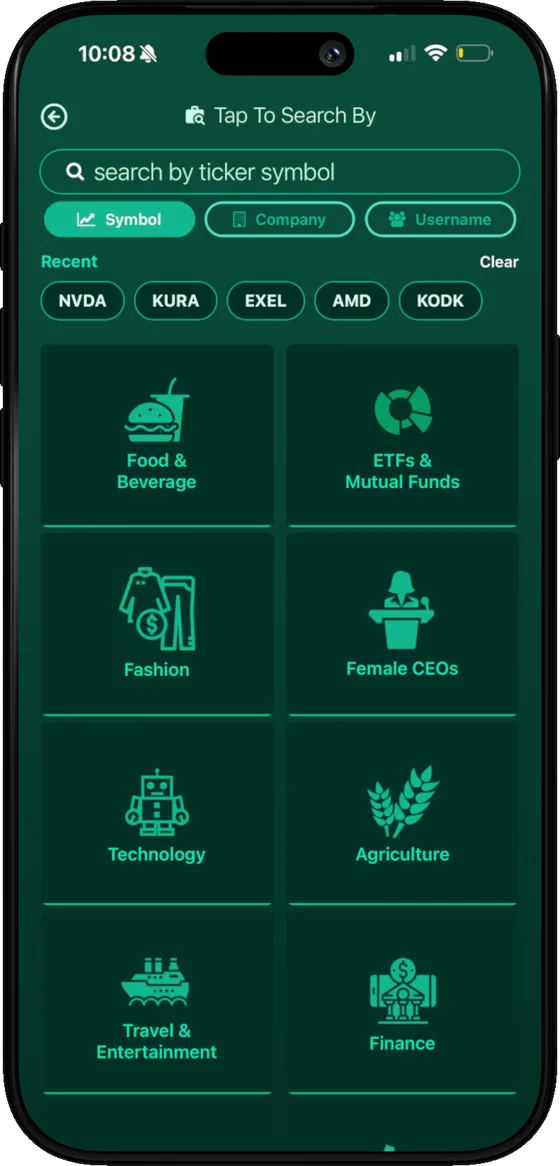
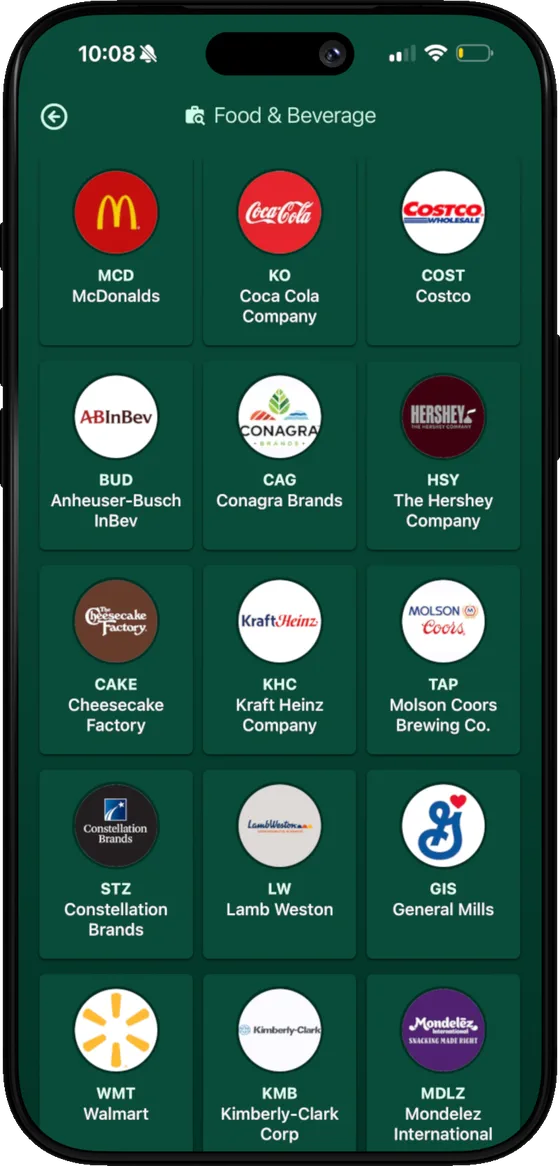
Students search by ticker or company name, or browse by industry, from Food & Beverage to Fashion, Technology and ETFs.
Owning a share of McDonald's, Costco or Coca-Cola makes more sense to a sixteen-year-old than a textbook definition of equity.
02 · Build
Invest $10,000 at real-time prices
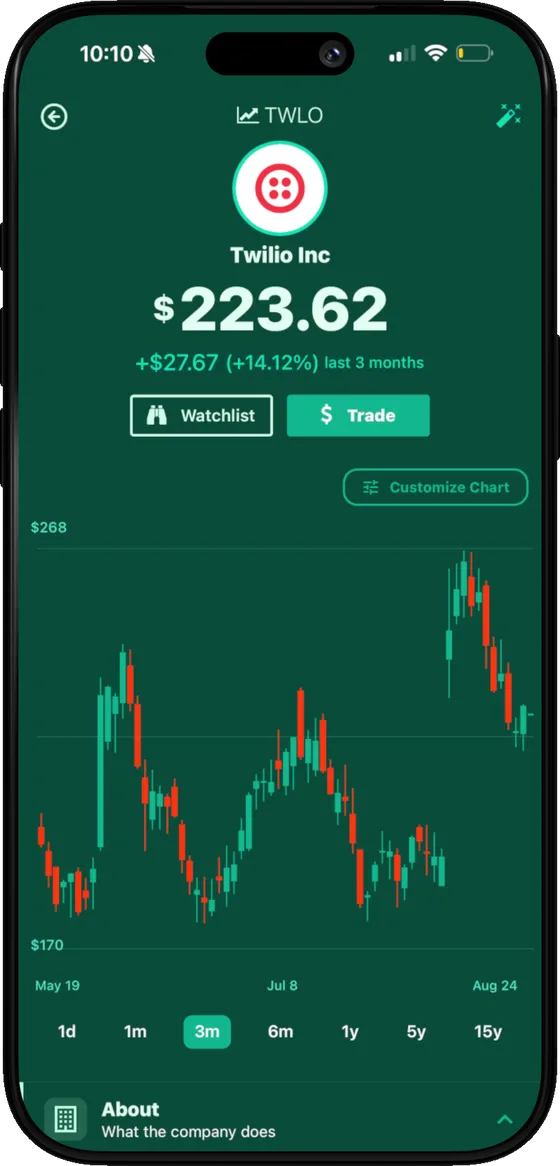
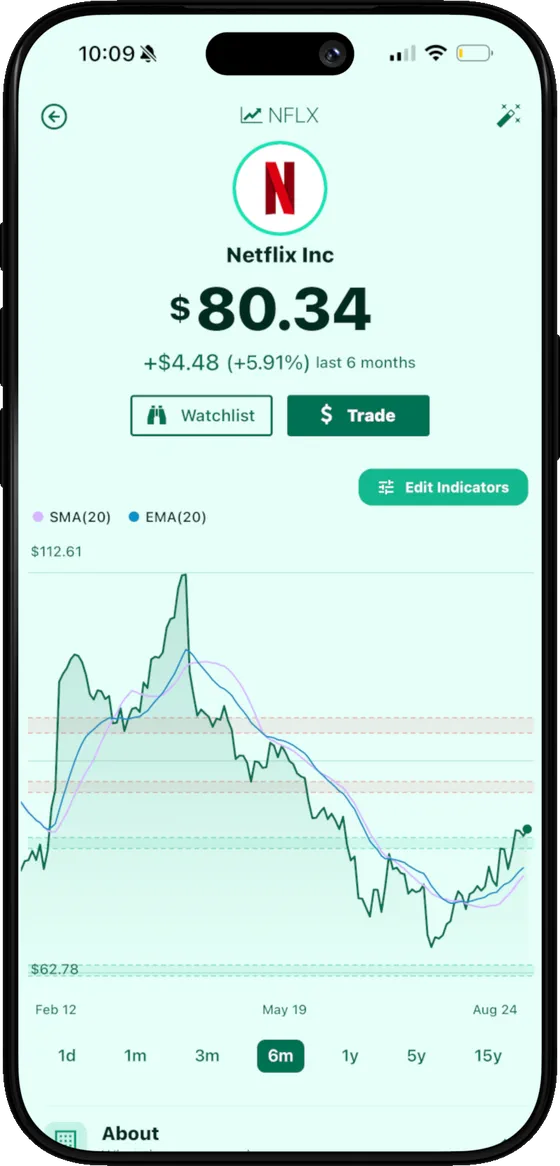
Students buy stocks, ETFs and crypto inside a simulated $10,000 portfolio, priced in real time from Nasdaq and Coinbase.
Nothing is at risk, but every pick moves with the real market from that day on, so the risk and return they study in class shows up in their own account.
03 · Curriculum
Access integrated curriculum
Rapunzl's simulator connects to 48 standards-aligned modules and 5 prebuilt courses, including the AP modules mapped below.
The curriculum is woven around actions students take on the platform, so every trade ties back to a lesson on diversification, risk or compound growth.
Weekly challenges rank every student by portfolio gains, and a classroom leaderboard shows who's ahead and what they're investing in.
Students can also enter Rapunzl's free National Scholarship competition, where the top portfolios from January through April win prizes paid into 529 college-savings accounts.
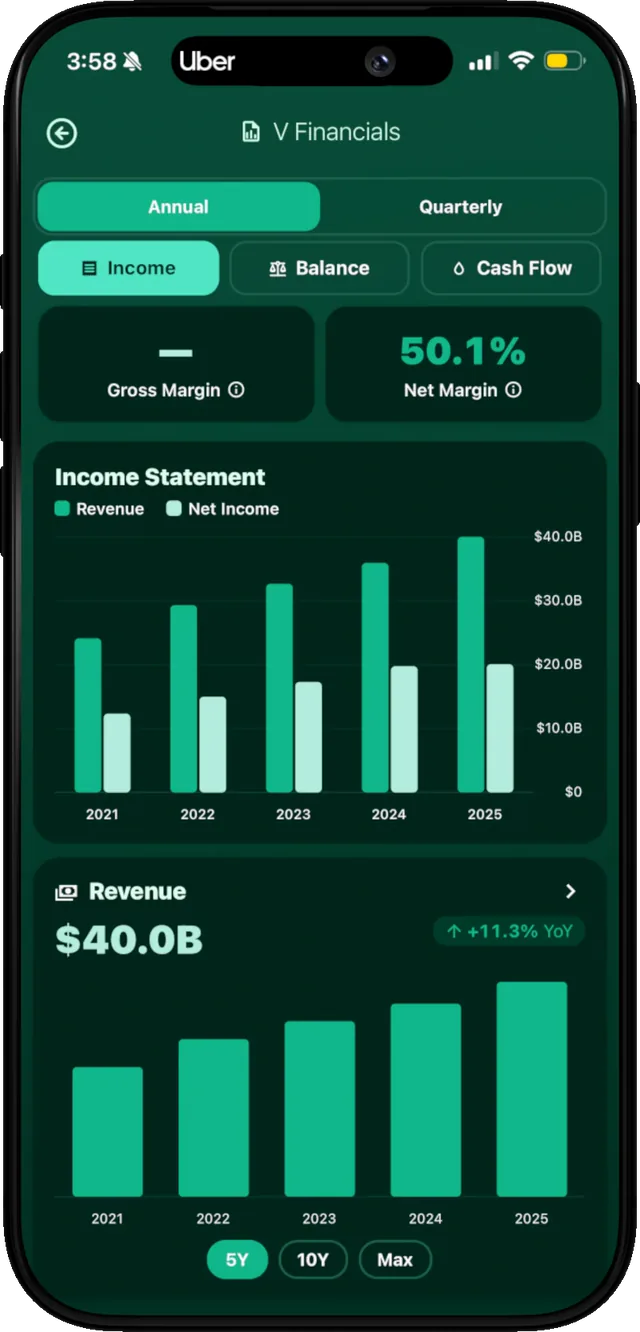
Unit 3 of AP Business with Personal Finance teaches the income statement, the balance sheet and cash flow.
Rapunzl lets students open all three for thousands of public companies, built from their SEC filings, so the accounting they learn in class describes a business they have actually heard of.
CED 3.6Income statementWhat did the company earn?
CED 3.7Balance sheetWhat does it own, and what does it owe?
CED 3.8Cash flowWhere did the cash actually go?
Rapunzl × AP Business with Personal Finance
8 Rapunzl modules built for this course.
Rapunzl has 8 modules written for AP Business with Personal Finance, each mapped to specific topics in College Board's course framework, plus a Unit 5 investing capstone for the Financial Advisor Project. They sit alongside Rapunzl's full personal finance library, so teachers can pull extra lessons on credit, taxes or insurance when a unit needs them.
What's in the AP Business with Personal Finance course?
Business Canvas Project · spans Units 1 through 4
Financial Advisor Project · Unit 5 capstone
Unit 1
Businesses, Competition, and New Ideas
What a business is, markets and competitive advantage, PESTEL factors, where business ideas come from, vision, ethics, organizational roles, and supply chains.
Unit 2
Marketing
Marketing to customers, consumer behavior, market research, and the four Ps: product, price, place, and promotion.
Unit 3
Personal Saving and Borrowing
Saving for future purchases, and borrowing, credit, and debt.
Business Finance and Accounting
Financial management, expenses, financial capital, the income statement, the balance sheet, cash flow, and ethics in financial reporting.
Unit 4
Management and Strategy
Management and leadership, KPIs, strategy and decision-making, and frameworks including Porter's Five Forces and SWOT.
Unit 5
Personal Goals, Budgeting, and Investing
Taxes, net income and budgeting; managing personal risk; and saving and investing for education, housing, and retirement, ending in a culminating Financial Advisor event.
How is the AP Business with Personal Finance exam structured?
Section
Time
Weight
I · Multiple choice
70 min
60%
II, Part A · Free responseBusiness Canvas Project validation
25 min
15%
II, Part B · Free responsePersonal Finance, Business Concept Application, Business Decision
65 min
25%
How much of Section I does each unit cover?
Unit
Weight
Unit 1Businesses, Competition, and New Ideas
20 to 30%
Unit 2Marketing
20 to 30%
Unit 3Personal Saving and Borrowing; Business Finance and Accounting
25 to 35%
Unit 4Management and Strategy
15 to 20%
Unit 5Personal Goals, Budgeting, and Investing
Not tested
Key facts from the Course and Exam Description
Five units total. Personal finance and investing content sits in Unit 3 (Personal Saving and Borrowing, then Business Finance and Accounting) and Unit 5 (Personal Goals, Budgeting, and Investing), the course's personal finance capstone.
Unit 5 is not assessed on the exam. The CED lets teachers place it before or after AP testing.
Personal finance is not confined to one unit. 12 to 15 multiple-choice items (20 to 25% of Section I), plus a dedicated Personal Finance free-response question, assess it across Units 1 through 4.
Exam structure: 2 hours 40 minutes. Section I is 60 multiple-choice questions (60%); Section II is four free-response questions (40%). The first exam is Tuesday, May 4, 2027, delivered digitally via Bluebook.
Two required projects. The Business Canvas Project spans Units 1 through 4 and is validated by an exam question worth 15% of the exam score. The Financial Advisor Project is the Unit 5 capstone the course culminates in.
How does Rapunzl line up with the AP framework?
AP Business with Personal Finance teaches all of the National Standards for Personal Financial Education from the Council for Economic Education and the Jump$tart Coalition.
Rapunzl's curriculum is built on those same standards. The table maps each part of the AP framework to the Rapunzl modules that teach it.
Get the free AP Business with Personal Finance Crosswalk
The one page AP Business with Personal Finance Crosswalk, mapping the College Board CED to Rapunzl lessons, free for your classroom.
AP Business × Rapunzl crosswalk
Run the whole AP class from one dashboard.
Rapunzl's Educator Dashboard lets an AP teacher build the course from the 8 aligned modules, upload a roster from a spreadsheet, assign lessons and assessments, and export grades for whatever gradebook the school uses.
Every module comes with a teacher guide and slides, so you don't need a finance background to teach Unit 5.
rapunzlteacher.com
AP module library
Competitive Advantage & The Business Environment
Fraud, Identity Theft & Data Privacy
Strategy & Decision-Making Frameworks
Entrepreneurship & The Business Model Canvas
Business Accounting & Financial Capital
Investing Portfolio Capstone
Marketing & The Four P's
Business Organization, Management & Strategy
Wk 1-2Entrepreneurship & The Business Model CanvasU1
Wk 3Competitive Advantage & The Business EnvironmentU1
Across classrooms that used Rapunzl, students averaged 34% on a financial literacy assessment before the program and 93% after it. The national average is 64%.
More than 150,000 students have learned with Rapunzl since 2018, and 83% of its partner schools serve low- and moderate-income communities.
Book a free demo and we'll walk you through the AP modules, the simulator and the Educator Dashboard with your own course calendar in mind.
A free walkthrough, no commitment required
Built around the AP units you're teaching this year
Pick a time that works for you, right after you send the form
My business and marketing course is built around it now. Students follow their positions, then stand up and explain to the class why they bought what they bought. Sitting through a bad week without panic-selling is a skill they'll use for a lot more than investing.
Director of Career Learning — Charleston, SC
See Rapunzl in your AP classroom
AP Business with Personal Finance FAQ
The first AP Business with Personal Finance exam is on Tuesday, May 4, 2027. College Board launched the course for the 2026-27 school year, so the first students take the exam at the end of that year. The exam runs 2 hours and 40 minutes and is taken digitally in Bluebook. Rapunzl has 8 modules mapped to topics across all five units, so teachers can plan the year around that date.
No. Unit 5 of AP Business with Personal Finance (Personal Goals, Budgeting, and Investing) is not assessed on the AP exam, and College Board's course framework lets teachers place it before or after AP testing. The exam assesses Units 1 through 4, so those units should come first. Teachers who run Unit 5 after the exam can use Rapunzl's stock market simulator and its Investing Portfolio Capstone module to give students hands-on investing practice in those weeks.
Personal finance makes up 20 to 25% of the multiple-choice questions on the AP Business with Personal Finance exam, according to College Board: 12 to 15 of the 60. Section II also has a dedicated Personal Finance free-response question, built around a fictional person's or household's finances and goals. Rapunzl's lessons on saving, banking, credit and debt map to the Unit 3 personal finance topics (3.1 and 3.2) that the exam draws on.
No. College Board doesn't require any particular tool for AP Business with Personal Finance. But Unit 5 and the Financial Advisor Project both ask students to make investing decisions, and a stock market simulator like Rapunzl gives them somewhere to make those decisions with real-time prices and see what happens, rather than only writing about them. Rapunzl's simulator is free for students.
AP Business with Personal Finance has two required projects. The Business Canvas Project runs through Units 1 to 4: students develop a product idea the way a founder would, and an exam-day question worth 15% of the exam score validates it. The Financial Advisor Project is the Unit 5 capstone, where students recommend a financial plan for a fictional household, and the teacher scores it rather than College Board. Rapunzl's Entrepreneurship & The Business Model Canvas module supports the first project, and its simulator and Investing Portfolio Capstone support the second.
Rapunzl aligns to AP Business with Personal Finance in three ways. Its curriculum covers the same six personal finance areas the course does: earning income, spending, saving, investing, managing credit and managing risk. Rapunzl also has 8 modules mapped to specific topics in College Board's course framework, spanning all five units. And Rapunzl's stock market simulator supports Unit 5 and the Financial Advisor Project directly.
The Business Canvas Project is the year-long entrepreneurial project in AP Business with Personal Finance, based on a modified version of the Business Model Canvas. Students work like founders on product development, customer research, marketing and financial documents across Units 1 to 4. On exam day they answer a validation question about their project: they pitch the idea, explain how hypothesis testing shaped a decision, and explain why a challenge entrepreneurs often face could threaten its viability. Rapunzl's Entrepreneurship & The Business Model Canvas module teaches the framework the project is built on.
The Financial Advisor Project is the Unit 5 capstone of AP Business with Personal Finance. Students act as financial advisors for a fictional household and recommend how it should manage its budget and reach goals like college, buying a home, retirement and charitable giving. The teacher scores the project, not College Board. Rapunzl's Investing Portfolio Capstone (Module 46) lets students build and test that plan on a simulated $10,000 portfolio priced in real time.
Yes. College Board's course audit for AP Business with Personal Finance requires that each student has a college-level Introduction to Business textbook, in print or digital form, and it publishes a list of example textbooks. Rapunzl doesn't replace that textbook. Rapunzl adds the hands-on part: a stock market simulator, company financials and AP-aligned lessons for the personal finance and investing units.
College Board publishes the AP Business with Personal Finance course framework, sample syllabi and a syllabus development guide on AP Central. Intuit, working with College Board, offers free, optional activities built on TurboTax, QuickBooks, Mailchimp and Credit Karma, covering taxes, credit, running a small business and marketing, plus its own Financial Advisor Project materials for Unit 5. Rapunzl's real-time stock market simulator is free for students, so they can put their Unit 5 plan into a portfolio priced by the live market.
Yes. Rapunzl's stock market simulator is free for students, with real-time prices and unlimited trades, so AP Business with Personal Finance students can keep practicing on rapunzl.app outside class. Teachers can try the simulator and the Educator Dashboard with a 30-day free trial, or request a demo to see Rapunzl's AP modules.
AP® is a trademark registered by the College Board, which is not affiliated with, and does not endorse, this product. This resource is aligned independently to the publicly available AP® Business with Personal Finance Course and Exam Description. Course details reflect College Board's published CED and AP Central as of the 2026-27 launch year; confirm anything scheduling- or budget-critical against those sources directly.